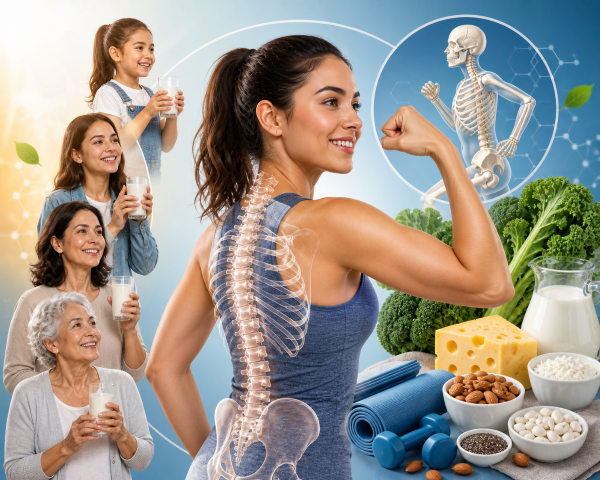
Bones Are Not Static — They Constantly Remodel
Many people think of bones as inert scaffolding, but they are living, dynamic tissue. Specialised cells called osteoblasts build new bone while osteoclasts break old bone down. This remodelling cycle replaces the entire skeleton roughly every 10 years. Peak bone mass is reached around age 30; after that, the balance gradually shifts toward more breakdown than formation — making what you do before 30 critically important, and what you do after 30 important for slowing loss.
Why Bone Health Matters
Osteoporosis — low bone density — affects over 200 million people worldwide and is responsible for approximately 8.9 million fractures per year. Hip fractures are particularly serious: up to 30% of patients die within a year, and many who survive lose the ability to live independently. Osteoporosis is largely preventable and, when detected early, treatable.
The Key Nutrients for Bone Health
Calcium
Calcium is the primary structural mineral in bone (99% of the body's calcium is in bone and teeth). The body cannot produce it — it must come from diet.
- Adults 19–50: 1,000 mg per day
- Women over 50, men over 70: 1,200 mg per day
Best food sources: dairy (milk, yoghurt, paneer), fortified plant milks, tofu made with calcium sulphate, ragi (finger millet — one of the richest plant sources), sesame seeds, green leafy vegetables (amaranth, drumstick leaves), and small whole fish.
Vitamin D
Without vitamin D, the gut absorbs only 10–15% of dietary calcium. With adequate vitamin D, absorption rises to 30–40%. Most people in India are deficient despite abundant sunlight, due to indoor lifestyles, air pollution, and skin pigmentation.
Protein
Bone is approximately 30% protein (primarily collagen). Adequate protein — at least 0.8g per kg of body weight per day — is essential for the collagen matrix that gives bone its flexibility and fracture resistance. Both too little and too much protein can harm bone; the optimal range is well within typical intakes.
Vitamin K2
Vitamin K2 activates proteins that direct calcium into bone and prevent it from depositing in arteries. Found in fermented foods (natto, some cheeses), it works synergistically with vitamin D and calcium.
Magnesium and Phosphorus
Both are structural components of bone mineral. Magnesium also activates vitamin D. Nuts, seeds, legumes, and whole grains provide both.
Exercise for Bone Density
Bone adapts to mechanical load — the greater the force placed on bone, the denser it becomes. The most effective exercise types are:
- Weight-bearing aerobic exercise — walking, hiking, jogging, dancing, stair climbing
- Resistance training — lifting weights or using resistance bands stimulates bone formation, particularly in the spine and hips
- Balance and coordination training — yoga, tai chi — reduces fall risk, which is as important as bone density for preventing fractures
Swimming and cycling, while excellent for cardiovascular and joint health, do not load the skeleton and do not build bone density.
Risk Factors for Osteoporosis
- Female sex (especially post-menopause — oestrogen protects bone)
- Age over 50
- Low body weight
- Smoking — directly inhibits osteoblasts
- Heavy alcohol consumption
- Long-term corticosteroid use
- Thyroid, kidney, or liver disorders
- Sedentary lifestyle
Screening and Treatment
Bone density is measured by a DEXA scan, a painless, low-radiation X-ray. It is recommended for all women over 65 and postmenopausal women under 65 with risk factors. When lifestyle measures are insufficient, medications including bisphosphonates can dramatically reduce fracture risk.